Where the Logo Wears Off a Phone Grip — and Where to Put It Instead (Malaysia)
Hand out 300 branded phone grips and you have just started 300 simultaneous abrasion tests, and you are not invited to watch any of them. A mug gets washed. A tote gets folded. A phone accessory gets touched — with a thumb, against a pocket lining, through hand sanitiser and sunscreen — dozens of times a day for as long as it stays on the phone. It is the harshest daily-wear environment in the whole corporate gift catalogue, and the item is small enough that a worn logo is the only thing anybody sees.
This article is about survival and visibility rather than artwork: where on a hand-held accessory a mark gets destroyed, where it lives, what each body material does to the adhesion of a decoration, why anything standing proud of the surface is at risk, and the tests to run on a sample before you approve a run. Which process suits a particular logo at small sizes is a separate conversation — this one starts after the process is chosen and asks whether the mark will still be there next Deepavali.
What actually attacks the mark
Four mechanisms, in roughly the order they do damage:
- Thumb and fingertip abrasion. Skin is soft, but it carries grit and it comes back thousands of times. Ink films thin gradually and go matt before they go patchy, so the first sign is a logo that looks slightly dull rather than one that is missing.
- Pocket and bag abrasion. Keys, coins, a lanyard clip, denim seams. This is the mechanism that kills raised decoration, because a proud edge catches instead of sliding.
- Solvent attack. Alcohol-based hand sanitiser is the routine one, and it lands on a phone accessory more often than on almost anything else somebody owns. Insect repellent containing DEET is the aggressive one — it is a known plasticiser attack on printed plastics, and in this climate it is on a lot of hands. Sunscreen, mosquito repellent and a sweaty commute in the same afternoon is an ordinary Malaysian day, not an edge case.
- Ultraviolet exposure and heat. A phone spends time face-down on a table in the sun and on a car dashboard. Some ink pigments fade; some clear coatings yellow. Bright reds and process blues are typically the first to shift.
The contact map
Every phone accessory has zones that get touched constantly and zones that almost never do — and the touched zones are usually the ones a designer wants to brand, because they face outwards. Resolving that tension is the whole job. This is the map we work from.
| Accessory | High-wear zone | Where the mark survives | Who sees it, and when |
|---|---|---|---|
| Pop-out grip | The top disc face — the exact spot the thumb pushes to collapse it | Nowhere else is visible, so the answer is to change the process, not the position: recess or engrave rather than sit on top | Everyone behind the user, all day. The highest-exposure surface in the category. |
| Ring holder | The ring itself, where a finger rotates inside it | The base plate around the ring — touched rarely, seen constantly | Onlookers whenever the phone is held up |
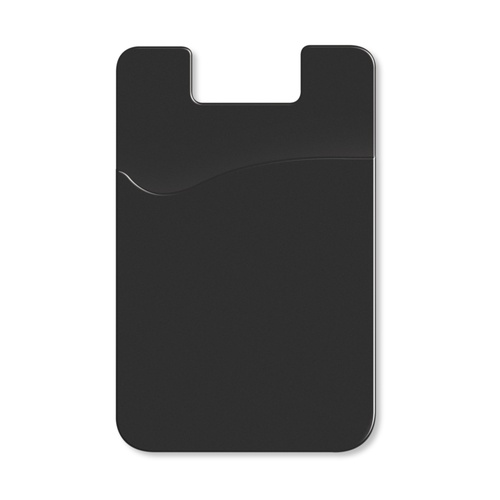
| Stick-on card wallet | The top edge and flap where cards are pushed in and out | The lower two-thirds of the outward face | The person at the counter, several times a day |
| Folding stand | The hinge-adjacent edges, opened with a fingernail; the cradle lip the phone slides against | The outer back panel — the largest, flattest, least-touched face on the item | The room when it is open on a desk; the user when it is closed |
| Finger strap | The strap web, under a finger permanently | The anchor plate on the case | Onlookers only |
| Extending handle for video | The whole gripping section, held in a closed fist | The base cap and the clamp arm | Whoever is in front of the camera |
The rule the map produces
If a face is both high-wear and high-visibility, do not move the logo — change how the logo is made, so the mark sits at or below the surface plane. If a face is low-wear and high-visibility, you have a free choice and can use the most colourful option available. If a face is high-wear and low-visibility, do not brand it at all.
The body material decides adhesion before anything else does
Two accessories decorated with the same process on different bodies age completely differently, because a decoration only lasts as long as its grip on the substrate underneath.
Rigid moulded plastics
Styrene-based and polycarbonate blends accept solvent-carried inks well: the solvent softens the surface slightly and the ink keys into it rather than resting on top. That chemical bond is why a well-run print on a plastic grip survives a year of thumbs. The risk is mould-release residue left on the part — an unwiped surface lets a good ink film peel in sheets. Ask whether parts are cleaned before decoration; the answer tells you a lot about a factory.
Silicone and soft elastomers
The most commonly botched substrate here. Silicone is chemically unreactive and very low in surface energy, so standard inks have nothing to key into and flake off at the first stretch. It needs a silicone-specific ink system or a primer, and a part free of moulding residues. A debossed or moulded-in logo — created in the tool rather than applied afterwards — is the failure-proof route on soft bodies.
Anodised aluminium
The most durable option on a hand-held item, for a structural reason rather than a marketing one. Anodising creates a hard porous oxide layer that is then coloured; laser marking removes the colour from inside that layer. The mark is not sitting on the surface — it is part of it, below the wear plane, and a thumb cannot abrade off what it never touches. If an item must look intact after two years of daily handling, this is the answer, monochrome being the trade-off.
Bamboo and timber
A laser mark is charred into the fibre and cannot rub off either. The variable is contrast, not survival: bamboo darkens with handling and skin oils, so a mark that is crisp on delivery loses contrast against a surface catching up with it. Deeper marks and a sealed finish help.
Height is the enemy
The most useful principle here is about the third dimension. Anything standing proud of the surrounding surface gets attacked at its edges, because abrasion finds the first thing it can catch. A resin-domed badge is glossy and protects the artwork underneath it — excellent on a folding stand’s back panel, a poor idea on the thumb face of a grip, where that raised edge is exactly what a pocket lining works at. An engraved, debossed or recessed mark survives on any face, because the wear surface sits above it and takes the damage instead.
The practical rule: on a handled face, put the mark at or below the surface plane. Above the plane is only for protected faces. Applying that one test to a mockup removes most of the wear complaints we have ever seen on this category, and it costs nothing to apply at artwork stage.
Colour choices that hide wear, and colour choices that advertise it
Nothing on a handled item survives untouched forever, so the second question is how it looks while ageing. Maximum contrast ages worst: crisp white on a black body is the most legible combination on day one and the most brutal about every scratch by month six, because thinning reads instantly as grey haze. Tone-on-tone marks — a debossed logo in the body colour, or an engraved mark on a matching finish — age almost invisibly. Metallic inks scuff to a dull grey. Dark ink on a light body sits in the middle and is a sensible default for volume.
There is a brand-guidelines conversation embedded in that, and it is better had before tooling. A brand that insists on a full-colour mark on the thumb face of a grip is choosing legibility today over legibility next year — a fair call for a single-event door gift, the wrong one for a staff item.
Two tests before you approve 300 pieces
Each takes minutes on a pre-production sample and all are worth writing into the acceptance criteria.
| Test | Method | Pass |
|---|---|---|
| Tape adhesion | Score a small cross-hatch lattice through the decoration with a sharp blade, press adhesive tape firmly over it, pull it off in one movement. This is the standard cross-hatch method used across the coatings industry. | No squares lift. Any flaking means the ink is sitting on the surface rather than keyed into it. |
| Sanitiser rub | Damp a cloth with alcohol hand sanitiser and rub the mark twenty times back and forth under firm finger pressure. | No colour on the cloth, no visible dulling. |
| Pocket simulation | Put the sample in a bag with keys and coins and shake it for five minutes. | Scuffs on the body are acceptable; damage concentrated at the edge of a raised decoration is not. |
| Repellent spot test | Only for outdoor-event stock: dab insect repellent on a corner of the mark, leave ten minutes, wipe. | No softening, no lifted edge, no colour transfer. |
A supplier who has done the work will not flinch at any of these, and a sample that fails the tape test at approval stage would have failed in someone’s pocket six weeks later. Our production team runs the first two as routine on decorated samples, which is why phone grip printing KL teams rely on starts with a substrate question rather than an artwork one.
Putting it in the specification
- Mark position named against the contact map, not just “front”.
- Mark height stated as flush, recessed or raised, with raised marks confined to protected faces.
- Substrate named, and for soft bodies a confirmation that a silicone-compatible ink system or a moulded-in logo is being used.
- Parts cleaned of mould-release residue before decoration, stated on the specification sheet.
- Cross-hatch tape test and sanitiser rub test named as acceptance criteria on the pre-production sample.
- Colour approach agreed with the brand team, with tone-on-tone considered for anything staff will keep long term.
These decisions sit alongside the mechanical ones rather than after them. A grip is only as good as its pad, so it is worth understanding why cheap foam tape lets go in a parked car; a cradle is only as good as its opening, which is a matter of fitting a holder to the phones people actually carry; and a folding item is only as good as its joint, where the choice between friction hinges versus click stops decides how it ages. Minimum order across the category is from 300 pcs per design, with production at 21–45 days after artwork approval depending on quantity, roughly 15 days shipping, and express at 10 working days on limited models and quantities.
Questions buyers ask us
Will the logo on a phone grip wear off?
A surface-applied ink film on the thumb face will dull over time — that is physics, not workmanship. How quickly depends on the substrate, the ink system and whether the mark is flush or raised. A recessed, engraved or moulded-in mark on the same item will not wear off in any normal service life. If longevity matters more than colour, that is the trade to make.
Can we have full colour and still have it last?
Yes, if you put the full-colour mark somewhere protected — the back panel of a folding stand, the lower face of a card wallet, or under a protective dome on a low-wear surface. Full colour on a face that a thumb operates is where the compromise bites.
Our brand colour is a specific reference. Can it be matched exactly?
Solid ink systems match a spot colour closely. Engraving and laser marking do not produce colour at all — they produce contrast, so a brand colour is simply not available through that route. That is the single most common surprise at mockup stage and it is better raised at briefing.
Can you show us how the mark will sit before we commit?
Yes — send the item type and your logo and we will return a free digital mockup showing the position and scale, usually within one business day, along with the quotation. We have been a corporate gifting specialist since 2003, Singapore-based and now serving Malaysia nationwide, and we would rather move a mark on a mockup than explain a worn one after delivery.
Send the logo and tell us who will be holding it
Staff who will keep the item for years and delegates who will use it for a season deserve different decisions about position, height and colour. We supply custom phone accessories Malaysia for a phone accessory door gift or a long-term staff rollout, from 300 pcs per design, with nationwide delivery and a free digital mockup usually within one business day.
WhatsApp +60 10 717 5924 · Send your brief through our contact page
Aquaholic Gifts Malaysia · AS80, Jalan Hang Tuah 4, Taman Salak Selatan, 57100 Kuala Lumpur · quote-only pricing with itemised invoicing, ePerolehan-ready for government buyers.