Kitting a Property, Not Buying Items: Sequencing a Hotel Opening or Rebrand
Opening teams order in the sequence the items appear in the budget. Items should be ordered in the sequence their artwork can be frozen. Those two sequences are almost never the same, and the gap between them is where opening projects lose weeks — not on production, not on shipping, but on a folder that cannot be printed because the coffee house still has a working title, and a set of boards that cannot be finalised because the ballroom naming was still with the owner.
An opening or a rebrand does not touch one item. It touches the in-room compendium, the tableware mats in the outlets, the standing signage in the lobby and the function foyer, and what staff are wearing, all at once, all off the same logo file. We have supplied branded collateral to hospitality projects since 2003 as a Singapore-based corporate gifting specialist, now serving Malaysia. This is the working method we use with property teams: the three clocks that are not the same clock, the brand asset pack that must exist before anybody can quote properly, the order in which item families should be frozen, and the year-two question nobody asks.
Three clocks, running at different speeds
Every branded item in an opening is governed by three separate schedules, and confusing them is the most common planning error we see.
The artwork clock runs until a decision becomes unchangeable — at mockup approval for a debossed cover, much later for an insert or a replaceable board face. The production clock is the one suppliers quote: 21–45 days after artwork approval depending on quantity and finishing, plus around 15 days shipping nationwide, with express in 10 working days on limited items and quantities. The operational clock is the one the property lives by: signage up before the owner’s first walkthrough, mats in the outlet before the food and beverage dry run, compendiums in the rooms before the first room is released — usually earlier than the official opening date.
Plan against the operational clock, order against the production clock, and manage the artwork clock, which determines whether the other two are achievable. Properties that come to us through our hotel supplies branding across a whole property range with an opening date and a decision status per item get a workable schedule back. Those that send a logo and a wish list get a quote, which is a much less useful thing to receive.
The brand asset pack: what every supplier needs before anyone can start
A kitting project has multiple suppliers touching the same identity. If each receives a slightly different file, the property ends up with several slightly different versions of itself around the building, and nobody notices until they are all installed at once. The fix is one asset pack, issued once, to everybody.
| Asset | Why every supplier needs it | The gap we usually find |
|---|---|---|
| Vector master logo, text outlined | Every decoration method starts from a vector path | Only a flattened image exists; live fonts nobody has |
| One-colour and reversed versions | Deboss, blind emboss and engraving cannot render gradients or multiple colours | The mark only exists in a two-tone gradient |
| Colour reference for print and for material | Ink on paper, coating on PU and a painted board all reach the same colour differently | A screen value supplied with no physical reference |
| Minimum size and clear space | Decides whether the mark can go on a mat corner or only on a board | Never stated, so each supplier scales to taste |
| Approved property and outlet name lock-ups | Signage, folders and collateral must use identical wording | Working names still in use on half the documents |
| Language policy | Bahasa Malaysia and English lines change layout, spacing and board sizes | Decided after boards are already sized |
| One named artwork approver | Mockup approval is the gate that starts production | A committee, and therefore no approval at all |
The single highest-value line in a kitting project is the name of one person who can approve a mockup. Not a department, not a distribution list. Every week we hold artwork waiting for approval is a week that comes off the end of the schedule, and it is the only delay that is entirely within the property’s control.
Working backwards from the opening date
Build the schedule from the date the first room is released and the first outlet serves, then work backwards through the stages below. Every stage has to finish before the next can start, so a slip anywhere pushes the whole chain.
| Stage, working backwards | What has to happen | Timing |
|---|---|---|
| Room release and dry run | Everything installed, dressed and checked in situ | Your fixed date — earlier than the public opening |
| Delivery, unpack and goods-in check | Cartons opened, counted and checked against the mockup before staging by area | Allow a working buffer — never plan for delivery day to be dressing day |
| Shipping | Nationwide delivery; allow more for East Malaysia and island properties | Around 15 days |
| Production | Runs only after artwork approval; longer for embossing, foil and multi-item sets | 21–45 days |
| Mockup approval per item family | The named approver signs each digital mockup; positions and sizes locked | Mockups issued in about one business day; approval is your variable |
| Asset pack frozen and issued | Logo files, colour references, names and language policy released to every supplier at once | The true start of the schedule |
| Express, held in reserve | Limited items and quantities; a contingency, not a plan | 10 working days |
Two notes from experience. Reserve express capacity for the item most likely to change late, which is almost always the one carrying outlet names. And if the property is in East Malaysia or on an island, take the shipping stage seriously from the start; it is the stage attention cannot compress.
Freeze order: signage first, inserts last
Freeze item families in order of how hard they are to change, not of visibility or cost.
Standing signage goes first. A lobby welcome board, an outlet directory stand or a function foyer board carries the largest reproduction of the mark in the building, needs the legally correct property name and the final wayfinding vocabulary, and is the least forgiving: nothing on a finished board can be quietly amended.
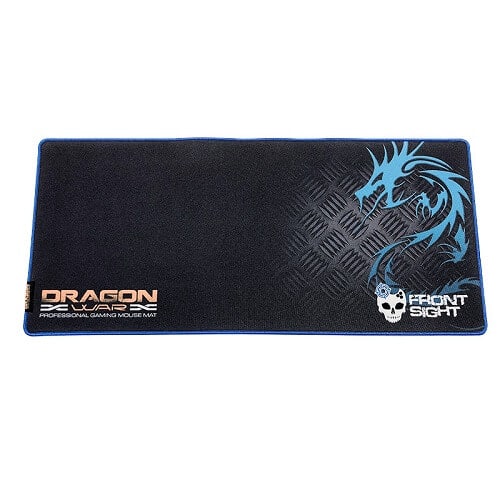
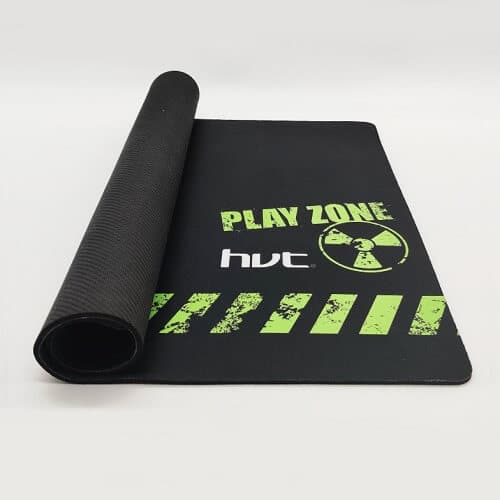
Table-top items sit in the middle. Mats depend on the final table setting and the final outlet identity, both of which settle once the operator has done a mock table. Freeze them after the setting is agreed and before the dry run.
Compendium folders come next, and their inserts come last. The folder itself only needs the property mark, so it can be committed early. The inserts need extensions, opening hours and outlet names — the last three things to settle in any opening. That split is exactly why the folder should be built around replaceable inserts in the first place, as we set out in designing a compendium so a rate change costs one insert.
Staff wear runs on its own track: it needs the longest human runway because sizing has to be collected from people who in many cases have not been hired yet, so it starts early on the people side even while artwork is still moving on the print side.
Standing signage: separate the shell from the face
Display boards date fastest while being hardest to replace, and one design decision resolves the tension: keep the permanent structure and the changeable content on different parts of the item. A board printed as one permanent panel dies the day an outlet is renamed. A board with a slot, a track or a replaceable face survives every rename, every seasonal event and every promotional cycle, and only the panel is reprinted.
Specify it that way from the start and the board becomes a long-life asset with a consumable face — the compendium-insert principle applied to a much larger object. It also changes what you order: fewer shells, more faces, and a small stock of blank faces for events the property has not planned yet. One practical detail on placement: boards are specified from a plan view and experienced at standing eye level. Before approving a size, print the artwork at scale, tape it where the board will stand, and read it from where a guest first sees it — usually the lift lobby or the entrance, not from a metre away.
Ship per item, stage per area
Suppliers ship by item; properties consume by area. That mismatch is why opening week is spent breaking down cartons in a corridor. Ask for cartons labelled by destination area, a packing list that names the area, and one receiving point with a named person responsible for the count. Then check on arrival rather than on dressing day: a wrong colour or a wrong name is recoverable while there is schedule left, and not while the owner is walking the floor.
Year two: what a logo refresh does to your stock
Marks get refreshed — a new group standard, a management change, a refit, a repositioning — and the property that ordered generously in year one finds itself holding stock carrying an identity it no longer uses. This is the exposure nobody quantifies at the point of ordering, and it is manageable if you think about it early.
| Item | Where the mark sits | Exposure at a refresh | How to reduce it |
|---|---|---|---|
| Compendium folder | Debossed or foiled into the cover | Whole item obsolete | Carry the mark on a slot-held plate or first insert; keep the cover mark minimal |
| Tableware mats | Printed or debossed on the panel | Whole item obsolete, but naturally consumed | Order to a shorter horizon and hold a working float rather than years of stock |
| Standing signage | Printed face panel, or the structure itself | Face only, if the shell is unbranded | Unbranded shell plus replaceable faces, specified at the first order |
| Inserts and printed collateral | Printed throughout | Low — these are consumables already | Print in runs sized to the refresh horizon, not to the best unit economics |
The rule that comes out of the table is easy to remember: buy permanence for what outlives the mark, and replaceability for anything that carries it. And ask marketing one question before placing a large order — is a brand refresh scheduled within the life of this stock? It is rarely asked, and the answer changes the quantity you should commit to.
The opening-week check
- Every outlet name reads identically on the boards, in the folder inserts and on the collateral. Compare them side by side on one table.
- The mark is the same version everywhere — check the one-colour applications against the full-colour ones, since that is where old versions survive.
- Colour matches between materials under the light each item lives in, not under the store room light.
- Dressed items are checked in situ: a folder in a dressed room, a mat under a laid cover, a board standing where it will stand.
- Floats are counted and stored, by area, with someone named as responsible for reissue.
- Reorder points recorded now, while the quantities are fresh and the specification is still open on somebody’s desk.
If mats are part of the kit, the dressed-room check is also the moment to start the service trial on them, since the dry run is your last chance to catch a construction fault before the room is in daily use — the method is in the service-life trial we run on tableware mats.
Questions opening teams ask
How far ahead should we start ordering for a hotel opening?
Work backwards from the date the first room is released, not the public opening. Allow 21–45 days of production after artwork approval, around 15 days shipping, and a genuine buffer for delivery, checking and staging — then add the time your own approval process needs, usually the least predictable stage of all.
Does the minimum order apply to every item separately?
The minimum order is 500 pcs, and it applies per item design rather than across the whole project, because each design has its own set-up. Where a property needs several variants of one item, keep the item identical and vary a replaceable element — an insert, a face panel, a card — so the order stays one design.
Can you deliver to a property in East Malaysia in time?
Yes, and the answer is to build the shipping stage into the plan rather than compress it later. Tell us the destination at the enquiry stage rather than at the purchase order stage, and we will schedule production against it. Express in 10 working days exists for limited items and quantities and is best held as a contingency for the item most likely to change late.
We are rebranding, not opening. Does the sequence change?
The sequence is the same, but the switchover matters more. A rebrand is visible to guests who already know the property, so mixed identities in one space are noticed immediately. Plan one changeover point per area, hold new stock until the whole area can be swapped at once, and start where guests look first. Invoicing is quote-only with an SST invoice, and we supply through ePerolehan for government and statutory properties.
Send us your opening date and your decision status
Tell us which decisions are settled and which are still moving, and we will come back with a freeze order, a schedule built backwards from your date, and free digital mockups usually within one business day. You can also plan your hotel supplies list with our team.
Aquaholic Gifts Malaysia · AS80, Jalan Hang Tuah 4, Taman Salak Selatan, 57100 Kuala Lumpur