
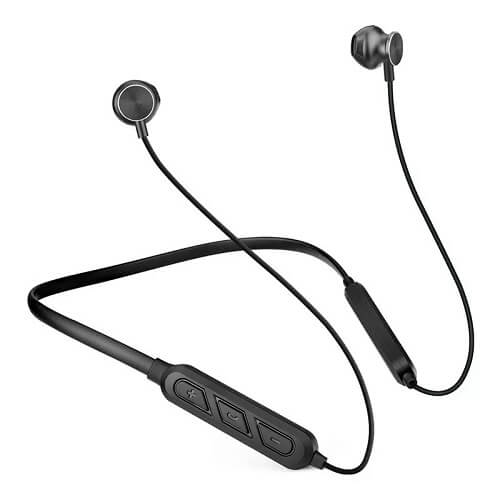
The Gift Nobody Wants to Share: Sealing, Packing and Handing Out Earphones
Put a bowl of keychains on a registration desk and people take one. Put a bowl of loose earbuds there and something different happens: they hesitate, they turn the item over looking for a seal, and a good number of them decline. Earphones are the only common corporate gift that goes inside the recipient’s body. That single fact changes the packaging brief, the handout format, the insert card and even how the cartons are opened on the day — and it is the part of an audio project that almost never appears in the brief we are sent.
The good news is that the same property makes earphones an unusually strong gift when it is handled correctly. A sealed, named, properly presented set of earbuds reads as personal in a way that a tote bag never will, precisely because nobody expects to share it. Below is how to specify the seal, which handout formats work and which fail, what to print on the insert card, and the packing constraints that apply because there are lithium cells inside — kept strictly to what is specific to a boxed audio product.
An audio gift is a personal-contact item, and buyers should treat it as one
The silicone tip of an in-ear earphone sits inside the ear canal, in contact with skin, in a warm environment. That is why the category behaves like a personal-care product rather than an accessory: recipients want evidence that nobody has handled it, they do not lend it out, and they judge a demonstration unit far more harshly than they would judge a demonstration bag.
Three practical consequences follow immediately, and they are worth stating explicitly to whoever is running the event:
- A try-before-you-take table does not work. A demonstration unit that has been in six ears cannot go back into the giveaway pool, and visitors know it. If you want people to hear the product, use one clearly marked demonstration unit with a set of tips that is discarded afterwards, and hand out sealed units only.
- Opened boxes cannot be redistributed. On other categories, a returned or opened item quietly rejoins the stock. On earphones it cannot, which means your buffer quantity has to be genuinely spare rather than notionally recoverable.
- The seal is part of the perceived value. The same product handed over shrink-wrapped feels newer and more considered than one handed over in a plain box that opens freely, even though the contents are identical.
Four levels of sealing, and what each one signals
“Individually packed” means four different things depending on who is saying it. Specify the level explicitly and the ambiguity disappears.
| Level | What it is | What it signals | Best used for |
|---|---|---|---|
| Polybag only | Product in a clear bag inside the export carton. | Bulk stock, not a gift. | Internal issue to staff who will unbox it themselves. |
| Printed box, unsealed | Retail-style box that opens freely. | Presentable, but “may have been opened”. | Desk drops where the recipient trusts the sender. |
| Box with tamper-evident seal | A branded sticker or label across the opening edge. | Unopened, and cheap to add. | Most staff and client gifts; doubles as a branding surface. |
| Shrink-wrapped box | Clear film over the whole box, factory applied. | Unmistakably new, retail standard. | Public handouts, roadshows, prizes and anything photographed. |
Separately from the box, there is the question of the tips themselves. The spare ear tip sizes can be supplied loose in a moulded tray or in a small sealed sachet. The sachet costs very little, and for anything handed to the public it is the detail that converts “a box of electronics” into “a hygienic personal item”. It also protects the spare tips from being lost between the tray and the carton, which is the ordinary reason recipients end up stuck with the size the factory fitted. Given how much ear tip sizes and who they fit determine whether the gift sounds any good, losing the spares in transit is a bigger failure than it looks.
One line to add to your specification: “Each unit shrink-wrapped, with a branded seal label across the opening edge, spare ear tips in a sealed sachet inside the box, and an insert card in the local languages required.” Those four clauses cover almost every hygiene and presentation issue this category produces.
Handout formats: what works and what quietly fails
| Format | How it behaves with earphones | Verdict |
|---|---|---|
| Open bowl on a counter | Visitors handle several units before choosing; hesitation is visible. | Avoid. Works for stationery, not for anything worn in the body. |
| Dropped into a goodie bag | The box is crushed by heavier items; lithium cells should not travel loose against metal objects. | Only if the box is rigid and packed on top, never at the bottom. |
| Handed over individually at a desk | Seal is visible, one unit per person, staff can say a line about it. | The default. Slower, and worth the time on a higher-value item. |
| Redemption against a coupon or badge scan | Controls one-per-person, and lets you pre-pack by session. | Best for roadshows and conferences where quantity control matters. |
| Named and pre-allocated | A name label on the outer sleeve makes the gift feel assigned, not distributed. | Strongest option for staff appreciation and long-service gifts. |
| Courier to home addresses | Each unit needs an outer mailer; the retail box is not a shipping box. | Viable for hybrid teams, but brief the mailer and the address list early. |
The row that surprises people is the goodie bag. Earphone boxes are light and shallow, so they end up at the bottom under a bottle and a notebook, and they arrive bent. If the campaign format is a bag, ask for a rigid box rather than a folding carton, and instruct the packing team to load the audio item last.
What the insert card should say
The insert card is the cheapest item in the box and the one that prevents the most complaints. Four lines are enough, and every one of them exists because we have seen its absence cause a problem.
- Charge the case fully before first use. Products ship part-charged by design, so the first impression depends on this sentence being read.
- If only one side powers on, put both buds back in the case and charge them together. This is the standard remedy for uneven drain in transit, and without it a working product gets reported as faulty.
- Try all three tip sizes. One line that measurably improves how the gift is judged, because most people never think to change them.
- Wipe the tips with a dry or lightly damp cloth. Do not soak, and do not use solvent on the mesh. Liquid drawn through the mesh into the driver is the most common way a working set of earbuds dies at home.
Point two is the one that saves your service inbox. What looks like a defective unit is usually the ordinary result of standby drain between the warehouse and the stage, and a single printed sentence turns a complaint into a non-event. For a mixed workforce, printing the card in Bahasa Malaysia alongside English is a small courtesy that raises how considered the gift feels.
Cleaning guidance worth printing, and a note on tip replacement
Silicone tips can be pulled off the nozzle, wiped and refitted. That is the correct maintenance routine and it is genuinely useful in a humid climate, where the tips pick up moisture and skin oils faster than they would in a cooler one. Two cautions belong alongside it. First, the driver behind the mesh is not sealed against liquid, so nothing wet should be pressed against the nozzle opening. Second, alcohol wipes degrade some silicone formulations over time, leaving the tip stiffer and less able to seal — which brings back the thin-sounding complaint months later, from a completely different cause.
If the gift is intended to last, tip replacement is the maintenance path worth mentioning. A model using a conventional nozzle size lets a recipient replace tips independently a year later, which quietly extends the useful life of the whole gift. It is the sort of specification detail nobody asks for and everybody benefits from.
The lithium constraint, in earbud terms only
Wireless earphones contain small lithium cells, which places three practical limits on how the order is handled. They are modest limits — the cells are tiny — but they need to be known before the event plan is written.
- Do not de-box units for a handout. The retail box keeps the buds docked in the case, which keeps the contacts protected and stops the buds waking up. Removing units from their boxes to fit a tighter goodie bag undoes both protections at once.
- Declare the contents honestly on domestic consignments. Air-served destinations, which for us usually means Sabah and Sarawak deliveries, are handled under battery-carrying rules and a vague description on the consignment note is what causes a shipment to sit at a hub. Declaring the goods correctly at the outset is faster than explaining them later.
- Carry a partial charge, not a full one. Stock is shipped part-charged deliberately. That is why the charge-first line on the insert card is not optional, and why booking delivery close to the event beats warehousing stock for months.
One more consequence sits at the intersection of hygiene and logistics: sealed units cannot be inspected on arrival without breaking the seal on the sample you inspect. Plan for a small number of units to be opened for quality checking and then written off rather than distributed, and agree that number when the order is placed. Over-ear models are the exception here, since they have no in-ear contact and can be demonstrated and repacked freely — which is one reason they suit a shared demonstration stand better than earbuds do.
Finally, remember that the seal label and the outer sleeve are printable surfaces in their own right. If the product surfaces are tight, the packaging can carry the campaign line at readable size — the same logic that governs pad print, laser and UV on a curved lid applies in reverse to the box, where space is abundant and cheap. When we plan promotional earphones for Malaysian events, the packaging is usually where the brand does most of its work.
Questions buyers ask us about handing out earphones
Can visitors test the earbuds at our booth?
Use a single demonstration unit, clearly marked, with a supply of spare tips that are discarded after each use — or use an over-ear model for the demonstration, which avoids in-ear contact entirely. Never return a tested unit to the giveaway stock.
Is shrink wrap worth the extra step?
For anything handed to the public or photographed, yes. It is a small addition at the packing stage and it changes how new the gift looks in the recipient’s hands. For an internal desk drop, a branded tamper-evident seal label achieves most of the same effect and adds a branding surface.
Can you add a personalised name label per unit?
Yes, applied to the outer sleeve or box rather than the product. Send the name list in a single spreadsheet with the spelling already checked, because proofing a long name list is the step most likely to delay a delivery date.
How many spare units should we order above headcount?
More than you would for a non-hygiene item, because opened units cannot be returned to stock. Allow for quality-check units, demonstration units and on-the-day replacements as genuinely consumed quantity, not as recoverable buffer.
What is the minimum order and how far ahead should we plan?
From 300 pcs per design. Work back from your event date: 21–45 days of production after artwork approval, plus about 15 days shipping, plus your own internal approval time before that. Express production of 10 working days exists on limited models and quantities. For festive peaks around Hari Raya, Chinese New Year, Deepavali or a year-end dinner, brief earlier than feels necessary — packaging additions such as sealed tip sachets and named sleeves sit at the end of the schedule where there is least room to move.
Tell us how it will be handed over, not just what to print
Give us the event format, the headcount and the date, and we will specify the sealing, the tip packaging and the insert card to match — then work the delivery window back from the day itself. We have been a corporate gifting specialist since 2003, originally out of Singapore and now serving Malaysian clients from Kuala Lumpur. Compare over-ear headphone corporate gift models and in-ear options with us before you commit.
WhatsApp: +60 10 717 5924 · Contact us
Aquaholic Gifts Malaysia · AS80, Jalan Hang Tuah 4, Taman Salak Selatan, 57100 Kuala Lumpur · MOQ from 300 pcs · nationwide delivery · SST-registered invoicing


