The Event Drawstring Bag Brief: Sizing, Handover Speed and Whether It Gets Worn Home
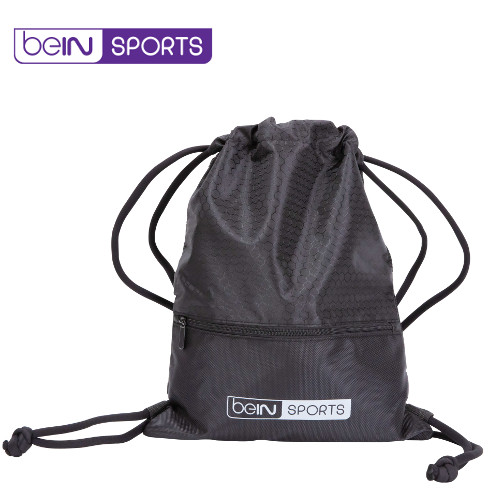
There is one reason the drawstring bag became the default giveaway at Malaysian sports days, university orientations, family days and school events, and it is not the unit rate. It is that this is the only item on the table that the recipient wears. A bottle is carried, a lanyard is worn under a shirt collar, a tote hangs off a hand that is already full — but a cinch bag goes on somebody’s back in one movement and starts working as advertising while the event is still running.
That advantage is fragile. The same bag, specified slightly wrong, becomes the thing found in the bin at the gate at four o’clock. This article is about the difference: sizing the bag around what people genuinely put in it, the ten-second window in which a recipient decides whether to wear it or bin it, and how to hand out several hundred of them without the queue stalling. If you are briefing an event drawstring bag Malaysia organisers hand out by the hundred, these three things decide the outcome long before the print does.
Size it from the payload, not from the catalogue
Most event bags are ordered at whatever size the supplier lists first. That works until somebody tries to put the day’s actual contents in, at which point one of two things happens: the bag will not close over a rolled towel, or it swallows a single brochure and looks empty for the rest of the day. Both are sizing failures and both are avoidable in ten minutes.
Work from the payload. Not the theoretical maximum — the things the majority of recipients will actually carry home.
| What goes in | The dimension it drives | What goes wrong if you ignore it |
|---|---|---|
| A4 folder, programme or certificate | Width, plus a little clearance beyond 21 cm | A tight bag forces the folder in at an angle and the corner punctures the panel |
| 500 ml water bottle standing upright | Height below the gather band | A bottle that sticks into the cinched mouth stops the bag closing at all |
| Folded event T-shirt | Width and depth together | The bag looks stuffed and misshapen in every photograph taken that day |
| Trainers plus a small towel | Depth — this is the payload that needs a base gusset | A flat bag distorts into a bulge and the print curves out of shape |
| Cap, sunglasses, small items | Nothing — but they fall to the bottom | An oversized bag looks empty and reads as low value on the shoulder |
Two of these matter more than the rest. The A4 dimension quietly sets the minimum width for any event where a programme, certificate or booklet is issued, and it is the one people discover on the day. Depth is the other: shoes and a towel need a base gusset, and adding one is a construction change that has to be specified before production, not a size you can substitute later.
One caution on going large. A bigger bag is not a safer bet, because a cinch bag has no structure to hold its shape and no padding to spread a load. Beyond gym kit and a bottle, the format itself runs out of road — which is the subject of the load ceiling before a cinch bag stops being wearable.
The ten-second take-home test
A recipient decides what to do with an event bag almost immediately: put it on, fold it into another bag, or carry it until there is a bin. Nothing that happens later changes that decision much. These are the five things being judged in those ten seconds, and every one of them is set at specification stage.
Five checks, run on the sample before you order
1. Can it go on with one hand? The recipient is holding a drink, a phone or a child. If getting the bag onto a shoulder needs both hands and a shrug, it gets carried instead — and a carried bag is a bag that gets put down.
2. Do the cords clear a lanyard? At conferences and orientations everybody is already wearing something around their neck. Short cords force people to take the lanyard off; long enough cords let the bag go over everything.
3. Does it look like a bag, or like packaging? A thin, translucent sack in a pale colour reads as disposable no matter what is printed on it. Body colour and fabric decide this in the first glance.
4. How much of it is branding? One clear mark is a bag somebody wears to the gym next week. A panel covered edge to edge with sponsor logos, a date and a hashtag is a bag that only belongs at that one event.
5. What is already inside it? If the first act is emptying out flyers to find the useful item, the bag is associated with rubbish before it has been worn. Pre-stuff sparingly, and put the good item on top.
Check four is the one clients push back on hardest, and it is the one with the clearest consequence. Every additional element on the panel narrows the range of places the bag is socially wearable. A dated event title is a deliberate choice to make the bag single-use; there is nothing wrong with that, provided it is a decision rather than an accident. It also affects how the artwork is composed, which is covered in why a large logo shrinks once the bag is worn.
Worn home, or dropped at the gate
The bags left behind at an event are rarely the ugly ones. They are the ones that were awkward. Awkward has three usual forms, and each has a specification answer.
Awkward to wear. Cords too short, cords too thin, bag too wide for a smaller frame. The fix is cord length and cross-section, and for a mixed-age audience, a bag proportioned for the smaller wearer rather than the largest.
Awkward to fill. A mouth that does not open wide, or a bag so shallow that the contents sit above the gather line. The fix is cord length again — enough slack to open the mouth fully — plus honest sizing against the payload.
Awkward in the rain. Outdoor events in Malaysia are wet events sooner or later, and a bag that arrives home soaked and stays damp does not get a second outing. That is a fabric decision, discussed in fabric choice for a wet-season event bag.
There is a fourth factor nobody specifies: whether the bag is useful for the journey home. At a sports day people leave with damp kit, a wet towel and a pair of shoes. A bag that can take those things gets used on the way out of the field; a bag that cannot gets folded and forgotten in a car.
The handover: why cinch bags jam a queue
Drawstring bags have one distribution problem no other giveaway has: loose cords. A stack of several hundred bags with open cords becomes a single tangled mass, and every handover then takes an extra two or three seconds of unpicking. Multiply that across a queue of parents at a school gate and you have a stalled lane and a volunteer apologising.
The fixes are simple and all of them are decisions made before delivery day.
Ask for bags packed cinched, not open. A bag folded with its cords drawn and tucked comes off the stack cleanly and hands over in one movement.
Decide pre-stuffed or flat, and say so early. Pre-stuffing turns a fast handover into a slow one at the table but a fast one at the gate; handing out flat bags and letting people collect items at stations moves the queue quickly but reduces what goes home. Whichever you choose, it changes how the bags need to be packed.
Hand over front face out. The recipient sees one face at the moment of handover. Give the volunteers a fixed orientation and the branded face is the one that appears in every photograph.
Two people per lane, not one. One lifts and separates from the stack, one hands over and makes eye contact. It is the cheapest throughput improvement available and it needs no equipment.
A tip for mixed audiences: at family days and school events, hand the bag to the child rather than the parent where you can. A child puts it on immediately. A parent puts it under an arm with everything else they are carrying, and the bag spends the day out of sight.
Four event briefs, and the specification each one wants
School or corporate sports day. Polyester, mid or dark body colour, gusseted base for shoes and a towel, cords proportioned for the smallest wearers, one clear mark. This is the brief where the bag genuinely gets used on the way home.
University orientation. Width set by the A4 handbook, cords long enough to clear a lanyard, and a design students will not be embarrassed to carry across campus in week three.
Family day or community event. Light and bright, sized for a cap and a bottle rather than for kit, and comfortable enough that a child will keep it on for hours.
Conference or delegate pack. A quieter, more premium fabric, a single restrained mark, and a size that takes the programme without creasing it.
Questions buyers ask about drawstring giveaways
What size drawstring bag should I order for an event?
Size it from the payload. If an A4 programme is issued, that sets the minimum width; if shoes or a towel are involved, ask for a base gusset. Tell us what the recipient will carry home and we will propose dimensions rather than defaulting to a stock size.
Should we pre-stuff the bags before the event?
Only lightly, and with the most useful item on top. Pre-stuffing speeds up the gate but slows down the table, and a bag that has to be emptied of flyers first starts its life associated with rubbish.
Can the bags be packed so the cords do not tangle?
Yes — ask for them folded with the cords drawn and tucked rather than left open. It costs nothing and it is the single biggest difference between a fast handover lane and a slow one.
What is the minimum order, and how early should we order for an event?
Minimum order is from 300 pcs per design. Production takes 21–45 days after artwork approval plus around 15 days shipping, so work backwards from the event date. Express production in 10 working days is available on limited styles and quantities.
Do you deliver nationwide and supply SST invoices?
Yes. We deliver across Kuala Lumpur and the rest of Malaysia, invoice with SST, and provide the documentation government and statutory buyers need for ePerolehan submissions.
Tell us the event, the crowd and what goes in the bag
Give us the date, the headcount, the contents and who is handing them out, and we will come back with a size, a fabric, a cord specification and a free digital mockup — usually within one business day. Singapore-based corporate gifting specialists since 2003, now producing for Malaysia. Minimum order from 300 pcs, quote-only, SST invoicing, nationwide delivery.
WhatsApp +60 10 717 5924 · send your brief through our contact page · or brief a string bag door gift for sports days and family days.