The Pebbles Do the Gripping: Grain Height, Channel Depth and a Sweaty Palm in a KL Sports Hall
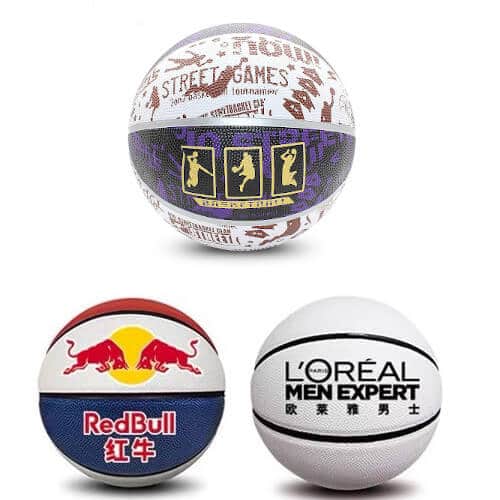
Photograph two basketballs side by side and they will look like the same ball. Run your thumb across both and they stop being the same ball within about two seconds. One drags. The other slides. The whole difference lives in a layer of moulded bumps thinner than a business card — the pebble grain — and in the recessed lines between the panels that most briefs never mention. Our production team has handled enough pre-production samples to know that “pebbled composite cover” is not a specification. It is a category. This article is about what actually sits under your palm, how to compare two samples without instruments, and what a month on a rough outdoor court in the Klang Valley does to a surface designed for a polished hall floor.
The short version. Grip on a basketball is not one property. It is grain height (how far the pebbles stand proud of the cover), grain density (how many contact points your palm meets), and channel depth (how far your fingertips can seat into the lines between panels). Grain height is what abrasion destroys first, and it destroys it fastest on unfinished concrete. Channel depth is what survives — which is why the channels matter far more than buyers expect, both for handling and, later, for your logo.
A pebble is a moulded contact point, not a decoration
The pebbling on a basketball is a field of thousands of small raised protrusions moulded or embossed into the cover. They are not there to look sporty. A smooth curved surface pressed against a palm makes contact over a broad, even film — and the moment that film includes sweat, the hand hydroplanes. Break the same area into thousands of tiny raised islands and two things change: each island carries a higher pressure per unit area, so it bites rather than slides, and the valleys give sweat somewhere to go that is not directly under your fingers.
That is why grain is a wet-weather feature as much as a dry one, and why it matters disproportionately here. A community hall in Cheras at eight in the evening is not an air-conditioned arena. It is warm, still, humid air, and every player has damp hands within ten minutes. A ball with tall, well-defined grain is still gripping at that point. A ball with shallow, half-formed grain has quietly become a wet bar of soap, and the person who received it concludes the gift was cheap — even though nothing has actually failed.
Grain height versus grain density
These are two separate levers and factories trade them off against each other. Tall, widely spaced pebbles feel aggressive and grippy but the tips are exposed, so they abrade quickly. Short, densely packed pebbles feel smoother, wear more slowly because the load is shared across more crowns, but give less positive “bite” when the hand is wet. Rubber outdoor balls sit at the tall-and-tough end because the grain is part of the rubber itself. Composite covers usually sit in the middle. Promotional display balls often sit at the shallow end, because a shallow mould is cheaper and easier to print flat, glossy artwork on.
None of this is written on the box. It is why we ask every client ordering custom basketballs in Malaysia to hold the physical sample before approving anything, rather than approving from a rendered image. A render has no grain.
The channels: the part of the ball nobody specifies
The channels are the recessed lines that divide the cover into panels — eight on the familiar arrangement, twelve on many designs built to international competition patterns. They do three jobs, and only the first one is obvious.
- Registration. The channels tell a player’s fingers where they are on the ball without looking, and shooting mechanics are built around seating the fingertips across one. Shallow channels remove that reference and the ball feels vague — the complaint people express as “it just feels off”.
- Drainage. Under a sweaty palm the channels are the escape route, and where court grit collects rather than sitting under the fingers.
- Shelter. Because a channel is below the surface of the surrounding pebbles, it never touches the floor. Nothing in the channel gets abraded by bouncing. That single fact has consequences for branding, which is why where ink lasts longest on a bounced ball turns out to be a question about channel geometry rather than a question about ink.
One shortcut is worth knowing about. Some moulded rubber balls carry what the trade calls a skived or simulated channel — a groove that is convincing at arm’s length but barely recessed, sometimes reinforced with a printed black line so it reads in photographs. It looks like a channel. It does not seat a fingertip. If a sample’s channels disappear when you close your eyes and run a finger across them, they are decorative.
Local tip. Test channel depth with a fingernail, not a fingertip. On a genuine moulded channel you feel a distinct drop, a floor and a rise. On a decorative one the nail glides over a dish. Three seconds, and it is the most useful thing a non-specialist can do with a basketball sample.
The ten-minute grain and channel sample card
This is the sequence our team runs on a physical sample before a mockup goes out for approval. It needs nothing beyond a tap, a torch and your own hand. Record each result so you have something to compare the delivered batch against.
| Check | How to run it | What a pass feels like |
|---|---|---|
| Dry palm drag | Flat palm, light pressure, drag across a panel centre | Audible dry rasp and clear resistance; not a squeak, not a glide |
| Wet palm drag | Wet your palm, shake off the drips, repeat the same drag | Resistance drops but does not vanish; you can still stop the ball with the flat of your hand |
| Nail-drop channel test | Drag a fingernail across three different channels | A defined drop and rise on all three, consistent depth around the ball |
| Fingertip seat | Set a shooting hand on the ball with fingers across a channel | The fingers find and hold the line without you looking down |
| Raking light | Torch held almost parallel to the surface, look across the panel | Every pebble throws a small shadow; shadows are the same length across the whole panel |
| Seam-line consistency | Follow one channel all the way round the ball with a fingertip | No section where the channel fades out, widens or wanders |
| Grit test | Bounce it on a dusty outdoor surface, then wipe with a dry cloth | Dust lifts off the crowns easily; anything trapped is in the channels, not smeared into the grain |
Two deserve a note. The raking-light check catches moulding faults the hand cannot: a panel where the mould was tired and the pebbles came out half-height shows as a patch of shorter shadows. And the wet drag is the one that predicts complaints — a ball can pass every dry test and still be unusable in a humid hall.
What a month on a Malaysian outdoor court actually does
A basketball surface is a wear item, and the wear is not even — it is concentrated on the tops of the pebbles, because the tops are the only part that touches the ground.
A typical neighbourhood court here is unfinished or lightly painted concrete, usually with an open surface texture because that is what stops it turning into a skating rink in the rain. That texture is, in engineering terms, an abrasive, and every bounce is a small grinding pass. Over a few weeks of regular use the pebble crowns get truncated — flattened into little plateaus — and effective grain height falls. The ball still looks pebbled from a metre away. Under raking light the shadows have shortened. In the hand it now behaves like a shallow-grain ball, which is exactly the failure mode described earlier.
Channels degrade more slowly. Protected from the floor, what closes them up is packed grit and, in a rubber cover, gradual compression of the shoulders either side. A rinse and a soft brush restores most of it. Nothing restores a truncated pebble.
| Surface the ball will live on | How the grain wears | What to ask for in the brief |
|---|---|---|
| Sealed timber or sprung hall floor | Very slow; polish before truncation | Finer, denser grain is fine; prioritise defined channels and feel |
| Painted or coated indoor concrete | Moderate; crowns dull within a season | Mid-height grain, consistent shadow length across panels |
| Open outdoor concrete, taman court | Fast; visible flattening within weeks | Tall, tough moulded grain; accept a slightly coarser hand feel |
| Display shelf, trophy cabinet, photo wall | None — the ball is never bounced | Prioritise print sharpness and gloss; grain is cosmetic here |
The fourth row is the honest one, and it is where most corporate orders belong. If your basketballs are going into a gift box at an annual dinner or onto a shelf behind reception, grain height is a tactile impression, not a durability requirement, and you should be optimising for something else. That is the decision covered in which basketball grade you have actually ordered.
How to put grain and channels into a brief
“Good quality basketball” is not a brief — it gets you whatever the factory’s default cover is that month. These phrases actually change what arrives:
- Name the surface. “These live on an outdoor concrete court in Selangor, used weekly” tells a supplier more than any adjective.
- Ask for a deep-channel construction explicitly if the ball will be played with, and say that decorative or printed channel lines are not acceptable.
- Ask for grain consistency across panels as a stated quality point, so a tired mould becomes a rejectable defect rather than a matter of opinion.
- Ask for the sample in your colourway. Pigment loading changes how a moulded rubber cover feels, so a grip judgement made on standard orange does not automatically transfer to a dark brand colour.
- State the size. Size 7 is the standard men’s ball, size 6 the women’s, size 5 the common youth ball, size 3 the mini. Grain that feels right on a size 7 can feel coarse on a mini — the hand is the same size and the ball is not.
Where this sits in the timeline. Grain and channel decisions are moulding decisions, not printing decisions, so they have to be made at sample stage. Our sequence is a digital mockup in roughly one business day, production of 21–45 days after artwork approval, then around 15 days for shipping nationwide. Express production of 10 working days exists for limited styles and quantities, but it compresses the approval window, not the moulding — so ask for the physical sample early rather than shortening the tail.
Minimum order is from 300 pcs, quoted rather than listed, with an itemised invoice, and the paperwork can be prepared for ePerolehan where a government or statutory buyer needs it.
Basketball grip questions we get asked
Does deeper pebbling always mean better grip?
No. Deeper, more widely spaced grain gives a stronger initial bite with a damp hand, but the exposed crowns abrade faster and the feel can be coarse on smaller sizes. Density matters as much as height, and the right combination depends on whether the ball is played with weekly or displayed.
Can pebble grain be restored once it has worn flat?
Not meaningfully. Cleaning removes the film of dust and skin oil that makes a worn ball feel worse than it is, and that is worth doing — but truncated crowns are material that has been ground away. Channels are the recoverable part.
Why does a new ball feel slippery straight out of the box?
Usually a light release residue from moulding, sometimes a protective coating applied for shipping. A wipe with a damp cloth and a short break-in period normally resolves it. If a wipe makes no difference, the grain itself is shallow and use will not fix that.
Does the humidity in Malaysia affect grip?
It affects the hand more than the ball. Ambient humidity keeps palms damp for longer, so the wet-grip behaviour of the cover matters far more here than in a dry climate. That is why the wet palm drag is on the sample card as a pass or fail.
Can we brand the channels as well as the panels?
In many constructions yes, and it is often the smartest placement precisely because the channels never meet the floor. The constraint is width: a channel suits a wordmark, a repeated brand phrase or a contrast colour far better than a detailed logo. The exact area is confirmed on your mockup.
Send us the court, not just the logo
Tell us where these balls will actually live — a school hall, an outdoor taman court, a gift box — and we will match the grain and channel construction to it before you approve anything. Aquaholic Gifts is a Singapore-based corporate gifting specialist working since 2003, now serving clients across Malaysia from Kuala Lumpur. Free digital mockup, usually within one business day. You can also browse our custom basketball range to see the grades we stock.
AS80, Jalan Hang Tuah 4, Taman Salak Selatan, 57100 Kuala Lumpur · MOQ from 300 pcs · quote-only, itemised invoice, ePerolehan-ready