Travel Size Gifts at Volume: Weight, Bulk and Handover Speed
A curated travel set for two hundred senior clients and a travel giveaway for eight thousand roadshow visitors are the same category of product and completely different purchases. The second one is governed by arithmetic the first one can ignore: weight per unit, cubic volume in a storeroom, and how many a person can physically carry to a booth.
This is the volume side of the category — how to choose travel size gifts that work when the quantity is large, the budget per head is small, and someone has to distribute them.
Travel-size is a dimension, not a vibe
“Travel size” gets used loosely to mean small, but for a travel gift it should mean something specific: the item fits the constraints a traveller actually faces. Two thresholds do most of the work.
Any container holding liquid needs to be within the cabin liquid limit — commonly 100ml — or the item cannot be carried at all. And the whole gift needs to fit comfortably into the space a traveller allocates to non-clothing items, which in practice means it should disappear into a personal item rather than compete with it.
Applied honestly, that rules out a surprising amount of what gets marketed as travel gifts. A rigid organiser larger than a paperback is not a travel gift, it is a desk item with a travel photograph on the packaging. The test is whether a traveller would pack it a second time.
The three numbers that decide a volume order
Weight per unit
At a thousand units, fifty grams of difference per item is fifty kilos of freight, and it repeats every time the stock moves — factory to warehouse, warehouse to venue, venue to booth. For a multi-city roadshow the internal movement cost can rival the difference in unit price between two candidate items. Ask for the packed weight per unit at quoting stage, not just the price.
Packed volume
Volume decides how many cartons you store and how many trips someone makes from the store room. Compressible items win twice here: a foldable bag or a soft pouch packs down to a fraction of a rigid equivalent, and it is also the item more likely to be taken home. Ask for units per carton and carton dimensions, and do the arithmetic before you commit — a thousand units of a bulky item is a pallet, and pallets need somewhere to live.
Handover time
The overlooked one. At a roadshow or an event, the time it takes to hand over one unit sets the throughput of your entire activation. An item in a box that needs to be taken out and explained slows a queue; an item in a simple sleeve that can be handed over in two seconds does not. If you are giving away thousands, design for the two-second handover.
What works at giveaway scale
The items that survive all three constraints tend to be flat, soft and self-explanatory:
- Luggage tags. Flat, light, cheap, universally useful and impossible to misunderstand. The default for good reason.
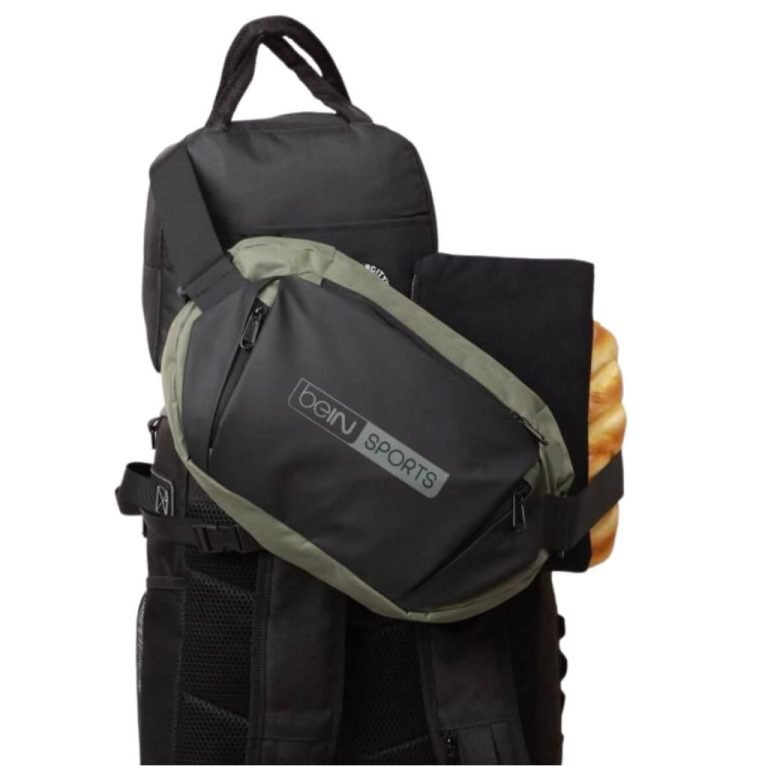
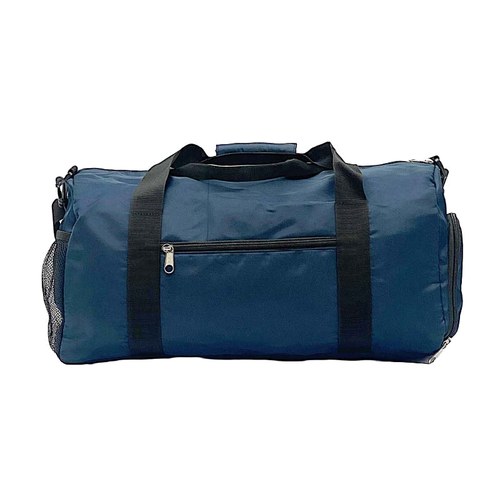
- Foldable and packable bags. Compress to almost nothing, weigh little, and get used far beyond the trip they were given for.
- Soft pouches and cable organisers. Flat-packed, low cost, and solve a problem most people have not bothered to solve themselves.
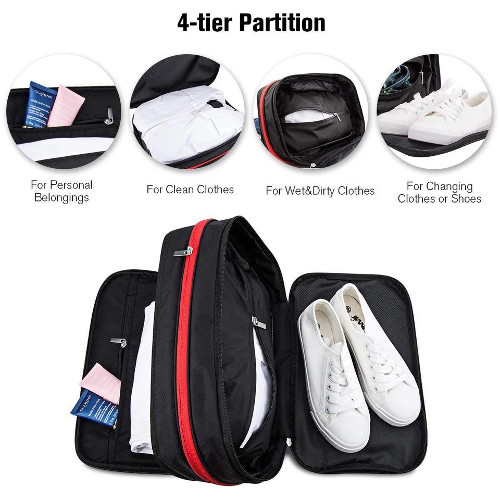
- Clear compliant toiletry pouches. Very cheap, genuinely useful at every airport, and almost nobody buys one for themselves.
- Passport sleeves. The lighter, flatter alternative to a full holder, and a fraction of the cost.
What does not work at scale is anything rigid, anything powered, and anything that needs a size choice. The moment a giveaway requires the recipient to pick a variant, throughput drops and you end up with unbalanced leftover stock.
Amenity and hospitality orders
Hotels, airlines and clinics buy travel-size items on a different basis again: the item is consumed rather than kept, the quantities are large and recurring, and consistency between orders matters more than novelty.
Three things change in that context. Reorder consistency becomes the primary supplier requirement, because the item sits in a guest-facing setting where a colour shift between batches is visible. Packaging has to survive storage in bulk rather than presentation on a table. And the specification should be locked in writing and matched against a retained sample on every reorder, since these orders repeat for years and the people running them change.
If your order is of this type, the supplier conversation should focus less on what the item is and more on whether they can make the same thing again in eighteen months.
Branding on small items
Small items constrain decoration in ways that catch people out. A print area of thirty millimetres will not hold a logo with a tagline, and reducing a full lockup to fit produces something illegible that reflects badly on the brand.
The fix is to prepare a merchandise version of the mark — emblem only, no descriptor, no tagline — and use it everywhere the area is small. Most brands already have one. If yours does not, producing it once is a small piece of work that pays back on every small item you ever order. Our guide to print methods for small travel items covers which methods hold fine detail at that size.
Distribution across a multi-city activation
The moment a giveaway runs in more than one location, distribution becomes the part that goes wrong, and it is worth planning with the same care as the item choice.
Get the supplier to split and label cartons by destination before shipping rather than sending one bulk consignment that has to be counted and re-packed by whoever receives it. That labour is invisible in the quotation and lands on the least equipped person in the chain. Allocate by expected footfall rather than evenly, because a KL flagship event and a smaller regional one do not consume stock at the same rate. And hold back a central reserve — around 15% works — so you can move stock to whichever location is running hot rather than watching one venue run dry while another finishes with cartons unopened.
For East Malaysia locations, ship earlier than the schedule suggests. Freight timelines there are less forgiving and the cost of missing day one of an activation is the whole activation.
Plan for what is left over
Giveaway orders almost always end with stock remaining, and how much is left is a decision you make at ordering rather than a surprise at the end.
The useful discipline is to decide in advance what leftovers are for. If the item is undated and unbranded to a specific campaign, leftovers are simply next quarter’s stock and over-ordering to hit a price break is rational. If the item carries a campaign line, an event name or a year, leftovers are scrap and the price break is an illusion. This single distinction should drive how aggressively you chase quantity discounts.
Where you do want the price break, one workaround is to print the campaign-specific element on the packaging or a card rather than the item, so the item itself stays usable afterwards and only the cheap component becomes obsolete.
When to split the order
For a large activation, running a small first batch before committing to the full quantity is worth the slightly worse unit price. A few hundred units in real use tells you things no sample can: whether the handover is actually as fast as you assumed, whether people take one or take three, whether the packaging survives being carried around a venue, and whether staff find them practical to restock.
Almost every event team that does this changes something before the main order — usually the packaging, occasionally the item. The cost of finding out at a few hundred units is trivial against finding out at eight thousand.
Match the item to how people arrive
A detail that changes which giveaway works: whether recipients are carrying anything already. At a trade show where visitors are collecting from twenty booths, your item is competing for room in a bag that is filling up, and anything bulky gets abandoned before they reach the car park. At a seated event where each person receives one item at their place, bulk is not a problem and a more substantial gift lands better.
The same applies to how people leave. If they are flying home from the event — common for regional conferences — the giveaway needs to survive being packed, which brings the whole cabin-rules question back into play for what is nominally a low-value item.
Give staff something to say
At giveaway scale the item is handed over by someone, and what they say while doing it is part of the gift. One sentence is enough: what it is, and the one reason it is useful. “It is a foldable bag, it lives in your carry-on” does more work than a printed insert nobody reads.
Brief that sentence with the stock, on a card in the carton where staff will see it. Items handed over without explanation get taken out of politeness and discarded later; items handed over with a reason get used, and the difference costs nothing.
Frequently asked questions
What counts as a travel-size gift?
Anything that fits the constraints a traveller actually faces: liquid containers within the cabin limit, and an overall size that disappears into a personal item rather than competing with it. Small alone is not enough.
What is the best travel giveaway for a large event?
Flat, soft, self-explanatory items: luggage tags, foldable bags, cable pouches, clear toiletry pouches and passport sleeves. They are light to move, quick to hand over, and need no size choice.
Does weight really matter for a giveaway?
At volume, yes. Fifty grams of difference across a thousand units is fifty kilos, and that cost repeats every time the stock moves. Ask for packed weight per unit alongside the price.
How do I brand a very small travel item?
Use an emblem-only version of your logo without a tagline or descriptor. Shrinking a full lockup to fit a thirty-millimetre area produces something illegible.
What should hospitality buyers prioritise?
Reorder consistency above everything. These orders repeat for years in guest-facing settings, so a retained sample and a written specification matter more than the initial unit price.
Size the order properly
Tell us the quantity, the venue and how the items will be handed out, and we will recommend options that are light to move and quick to give away. Request a mockup on any custom travel gift, or tell us about the activation.
If the order is a curated gift rather than a giveaway, building a full set instead is the better starting point, and either way it is worth checking security screening and what gets confiscated before you order.