When a Flat Logo Becomes a Steel Mould: Keychain Tooling, First Articles and the Days It Adds
Two briefs land on the same morning. Both say “custom keychain, our logo, in time for the annual dinner.” One of them ships comfortably. The other one is tight from day one — and the only difference is that the second design has to become a piece of steel first.
Almost every timeline surprise in keychain production traces back to a single question that nobody thinks to ask at briefing stage: does this design need tooling? A flat logo printed onto a stock shape needs none. A logo cast in zinc alloy, or moulded into soft rubber as a three-dimensional mascot, needs a tool machined specifically for it — an object that has to be cut, tested, sampled and approved before the first saleable piece exists. Nothing about the finished keychain reveals which route it took. Everything about the calendar does.
This is a plain-language guide to what tooling is, which decoration routes need it, what the first-article sample is really testing, and how to plan a festive deadline backwards so that tooling never becomes the thing that costs you the date. It sits alongside the metal keychain Malaysia die-casting and enamel work we produce day to day.
What a keychain mould actually is
Strip away the jargon and a mould is a negative. It is a block of steel or hardened aluminium with your shape machined into it as a cavity, so that molten zinc alloy or soft rubber compound takes that shape when it is forced in and cooled. A die used for stamping flat metal is the same idea in reverse: a hardened profile that presses your relief into a blank under pressure.
Three consequences follow from that, and they explain nearly everything buyers find confusing about custom-shape keychains.
- A tool is specific to one shape. Change the outline, the thickness or the position of the ring hole and you are cutting a different tool, not adjusting the existing one.
- A tool is made once and used repeatedly. It is a one-time step at the start of a design’s life, not a per-piece step, which is why reorders of the same shape behave very differently from the first run.
- A tool has to be proved before it is trusted. Steel comes off the machine, gets tested with a sample shot, and is often adjusted before it is released to production. That test piece is the first article.
Which routes need tooling, and which do not
This table is the one we mentally run through the moment a brief arrives. If your deadline is tight, read the right-hand column first and work upwards.
| Route | Tooling needed | What the tool is | Effect on the calendar |
|---|---|---|---|
| Printing or engraving onto a stock shape | None | Nothing is machined; the blank already exists | Fastest route; the usual choice for express work |
| Die-cut acrylic in a custom outline | Light | A cutting profile for the outline only | Small addition; custom shapes cost little time here |
| Die-struck flat metal, enamel-filled | Yes | A hardened die carrying the relief of your logo | Pushes the project up the production band |
| Zinc-alloy die-cast, three-dimensional | Yes, the heaviest | A multi-part steel mould with cavity, core and gate | Plan for a first-article approval round before production |
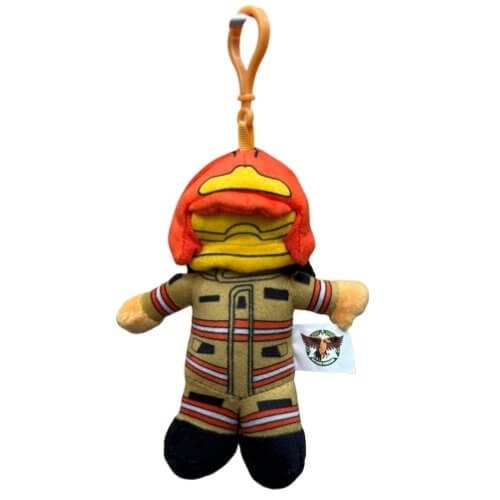
| Soft PVC, moulded to a custom shape | Yes | A machined mould plate, single-sided for 2D or double for 3D | Colour filling is manual, so allow approval time on the sample |
2D, 2.5D and 3D: three different tools, three different briefs
“Make it 3D” means something specific in tooling, and it is worth knowing which of the three you are actually asking for, because each needs a different kind of artwork from you.
2D — a flat face with recessed detail
The front is a single plane. Your logo sits as wells and raised borders within that plane, and colour is filled into the wells. A flat vector file is all that is needed. This is the workhorse of corporate keychains, and it is where enamel colours look crispest because every boundary is a hard edge.
2.5D — a flat back with a sculpted front
The face is contoured — a mascot’s cheeks are rounded, a building’s roof steps back — but the reverse stays flat so the piece sits comfortably in a pocket. This is the most common answer for character keychains, and it needs an extra step from you: a decision about which parts are high and which are low. If you do not specify it, the toolmaker will interpret it, and interpretation is where sample rounds get spent.
3D — sculpted on all sides
A true miniature: a bottle, a car, a mascot with a back as well as a front. Two mould halves meet, which creates a parting line somewhere on the object — a faint seam you should choose the position of rather than discover. Reference photographs from several angles help far more than a single front view, and if a physical model of the object exists, sending one is the single most useful thing a client can do.
The first article: what a physical sample tells you that a mockup cannot
A digital mockup answers one question: is the artwork correct? A first article off the new tool answers everything else. Our team checks the same five things every time, and we recommend you check them too rather than glancing at the sample and replying “looks good”.
1. Colour under the light it will be seen in
Enamel cured on metal reads differently from ink on paper. Take the sample to a window and to the ballroom or lobby where the gift will be handed over. Fluorescent office light flatters some blues and kills others.
2. Weight and balance in the hand
Perceived quality on a metal keychain is largely mass. A thickness change of a fraction of a millimetre is easy to make while the tool is still being proved and impossible afterwards.
3. The parting line and gate mark
Every moulded piece has a seam where the halves meet and a small witness mark where material entered. Both should sit on a discreet edge, never across a face or through the logo.
4. Where the ring hole sits
Hold the sample by the ring. If the piece hangs at an angle, the hole is off the balance point — and every photograph of your gift will show the logo tilted.
5. Fine detail survival
Compare the smallest element on the sample against your file. This is where the working tolerances in our guide to the minimum line weight your artwork has to hold at 40 mm either held or did not.
Planning backwards from a festive date
Malaysian gifting runs on a fixed calendar — Chinese New Year, Hari Raya, Merdeka, Deepavali and the year-end dinner season — and none of those dates move to accommodate a mould. The reliable method is to start from the handover date and work backwards through every stage, rather than forwards from the day you happen to start.
| Working backwards from… | Stage | Allow |
|---|---|---|
| The event itself | Buffer for internal distribution and packing into gift bags | Your own internal lead time — set it honestly |
| Goods on your floor | Shipping and nationwide delivery | Around 15 days |
| Goods leaving production | Production after artwork approval | 20–30 working days by quantity; tooling pushes you towards the upper end |
| Production start | First-article sample sent, reviewed and signed off | However long your approvers take — the most underestimated stage |
| Tool cutting start | Artwork locked and mockup approved | Mockup returns in about one business day; amendments are yours to control |
| Brief submitted | Quantity, style, colours and vector artwork gathered | Start here, not at the mockup |
Two stages in that table are entirely within your control and are where most lost time actually goes: how quickly artwork is finalised, and how quickly the sample gets approved. A brief that arrives with the quantity confirmed, the vector file attached and one named decision-maker will move through tooling faster than a larger budget with three approvers and a logo pulled from a slide deck.
What the tool covers on your next order
Once a tool has been cut and proved for your design, it is retained for reorders of that same design. Practically, that means a repeat run skips the tooling and first-article stages entirely and behaves much more like a stock-shape order. This is the strongest argument for designing a keychain you can run again — an evergreen corporate mark rather than a design carrying a specific year.
- Reuses the tool: the same shape in a different enamel colourway, a different plating finish, or different packaging.
- Needs a new tool: a changed outline, a changed thickness, a moved ring hole, or a year or event name that is part of the moulded relief.
- Sits in between: adding a printed or engraved back plate, which can often carry the changing information while the moulded front stays constant.
That last point is the most useful trick in this article. Put the permanent brand asset in the tool and the variable information — the year, the campaign, the anniversary — on a surface that can be changed without touching steel. A tourism operator can run the same moulded landmark every season and change only the printed reverse.
Two things sit just outside tooling but decide how the finished piece is judged. The first is the metalwork that connects it to a set of keys — see swivel clips, jump rings and nickel plating in a humid climate. The second is what happens when a moulded design has to be counted, bagged and moved in volume, which we cover in packing thousands of keychains for a roadshow.
Before you approve any tooling
- Confirm whether your design genuinely needs a custom tool or whether a die-cut outline achieves the same silhouette.
- Say out loud whether you want 2D, 2.5D or full 3D, and mark which areas should be raised.
- Nominate where the parting line and the ring hole should sit before the toolmaker chooses for you.
- Name one approver for the first article and give them a date.
- Keep dated or campaign-specific wording off the moulded face so the tool stays reusable.
The minimum order is 300 pcs per design. Production runs 20–30 working days after artwork approval depending on quantity and method, plus around 15 days shipping, with an express route of 7 working days available on limited styles and quantities. Quotes are issued with an SST invoice and government buyers can order through ePerolehan. We have been producing branded merchandise since 2003 as a Singapore-based corporate gifting specialist, and now serve Malaysian clients from our Kuala Lumpur office.
Tell us the date first, then the design
Send us the handover date along with your artwork and we will tell you straight away whether the design you want fits the calendar, and what the no-tooling alternative would look like if it does not. Start by browsing the PVC rubber keychain moulds we already hold in stock shapes.
WhatsApp +60 10 717 5924 · Send your brief through our contact page
Aquaholic Gifts Malaysia — AS80, Jalan Hang Tuah 4, Taman Salak Selatan, 57100 Kuala Lumpur. Minimum order from 300 pcs, nationwide delivery.