Nine Items, One Folder: What a Malaysian Buyer Actually Holds at Vacant Possession
Count what a Malaysian buyer is actually handed at vacant possession and the number surprises most project marketing teams. It is almost never “the keys”. On a typical condominium unit it is eight or nine separate physical things, arriving in the same ten minutes, at a counter, in front of a phone camera — and most of them are not keys at all.
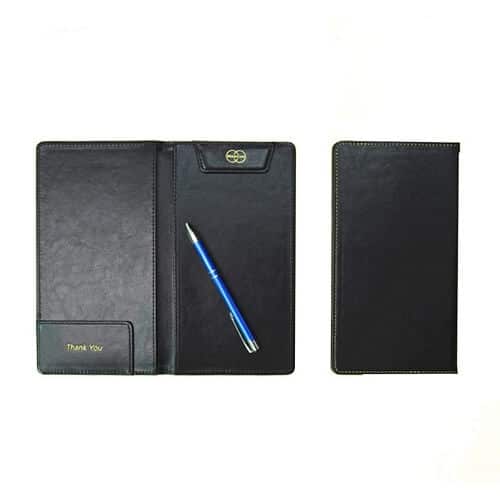
We build property handover kits Malaysia developers hand out at vacant possession, and the single most common brief we receive is a request for “an A4 folder with our logo”. That brief is written before anyone has laid the actual contents of one unit on a table and measured them. When they do, the A4 folder usually turns out to be the wrong object: too thin for the paperwork, too flat for the remotes, and with nowhere sensible for a set of keys that has to survive a car boot on the way home.
This article does the exercise properly. It works through what a Malaysian buyer receives on VP day, what physically holds each of those things, how many keys one unit really involves, and how to label them so the owner is not standing in a lift lobby at 9pm trying every key in the bunch. It is the specification stage — the part that decides whether the finished kit works. Once the contents are settled, how the kit reads in the handover photograph becomes the next decision, and it is a much easier one when the object already fits its job.
What actually changes hands on VP day
Delivery of vacant possession in Malaysia is a defined event, not a ceremony a developer invents. Under the Schedule G and Schedule H sale and purchase agreements made under the Housing Development (Control and Licensing) Regulations 1989, vacant possession comes with the certificate of completion and compliance issued, water and electricity ready for connection, and written notice served on the purchaser. That matters to a gift supplier for one reason: it fixes what paperwork exists on the day, and therefore what the folder has to carry.
The paper
The paper side is more varied than it looks. There is the notice of delivery of vacant possession, usually a single A4 sheet the buyer signs and returns. There is confirmation relating to the certificate of completion and compliance. There is a defect complaint form, which the buyer will use repeatedly over the following two years. For a strata development there are house rules, a management office contact sheet, and the first statement of maintenance charges and sinking fund contributions. There are often meter readings taken on the day, and an acknowledgement of keys received.
Two things follow. First, it is not all A4: house rules are frequently a stapled A5 booklet, meter slips are small, and warranty cards are anything from a business card upwards. Second, some of it is two-way paper — the buyer signs and hands part of it straight back, which a single sealed pocket makes awkward at the counter.
The things that are not paper, and not keys either
This is where the generic folder brief falls apart. A condominium unit typically hands over air-conditioner remote controls — one per indoor unit, so a three-bedroom unit can carry three or four. It hands over access cards for the lift lobby and the resident turnstile, often a car park barrier tag, sometimes a water heater controller or a smart lock fob. None of these are flat, and none of them belong loose in a plastic bag with keys that will scratch them.
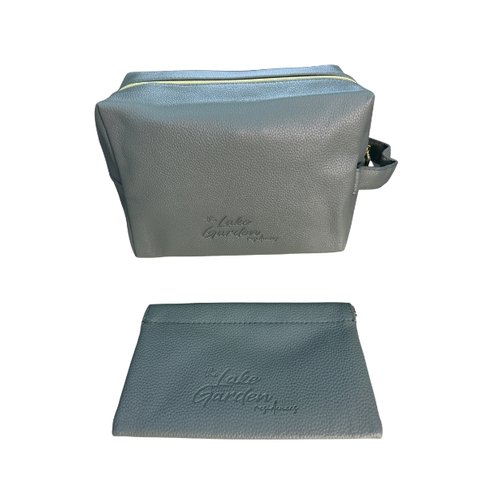
Our production team’s answer is a two-piece set rather than a single folder: a boxy zip pouch deep enough for remotes and fobs to stand up in, and a slim flat pouch keeping cards separate from keys. Keeping cards flat is not cosmetic — a card left curved in a hot car can take a permanent bow.
The VP unit inventory — our specification table
This is the table we ask a project team to fill in before we quote anything. Counts vary by development, so leave the count column to your own unit schedule — but the categories are consistent across almost every Malaysian condominium handover we have specified for.
| Item handed over | Typical count, one condominium unit | Where it should live | Labelling method |
|---|---|---|---|
| Main entrance door key | 2 to 3 copies | Front key panel, most accessible position | Printed position label on the folder |
| Bedroom and bathroom keys | 1 per lockable door | Secondary key panel, grouped | Numbered positions matching a printed plan |
| Letterbox key | 1 to 2 | Its own labelled slot — it is the one that gets lost | Named slot, not a generic number |
| Access card, lift lobby and turnstile | 1 to 2 per unit, sometimes per registered resident | Flat slim pocket, kept unbent | Pocket printed with the card’s purpose |
| Car park barrier tag or transponder | 1 per allocated bay | Deep pouch — it is thicker than a card | Bay number written on the accompanying slip |
| Air-conditioner remotes | 1 per indoor unit | Boxy pouch, standing upright | Room name sticker applied by site team |
| Notice of vacant possession and acknowledgement | 1 set, partly two-way | Open front pocket, easy to remove and re-file | Pocket titled on the lining |
| Defect complaint form | 1, used repeatedly for two years | Its own marked pocket, not buried mid-stack | Printed tab or contrasting sleeve |
| House rules, management contacts, charges statement | 1 booklet plus loose sheets | Main document pocket, sized for A5 as well as A4 | None needed if the pocket is sized right |
| Warranty cards, appliance manuals | Varies by fit-out | Expandable rear pocket or gusset | None |
Do this before you brief anyone. Take one completed unit’s full handover contents, put them on a table, and photograph them from above with a ruler in frame. That single photograph answers more specification questions than a two-page brief, and it is the first thing we ask for.
Why the generic A4 wallet keeps failing
The off-the-shelf handover folder is designed around a paper size. A handover is designed around a unit. Three mismatches show up again and again.
Capacity is quoted in pages, not millimetres. A folder described as holding “up to 20 sheets” tells you nothing once a stapled booklet and a set of warranty cards go in. Measure the real stack with a ruler and specify the pocket depth in millimetres. If your document set compresses to 6 mm, a folder built for 3 mm will gape at the closure and the whole kit photographs badly.
There is nowhere for volume. Remotes, fobs and transponders have depth. A flat folder either cannot take them, or takes them and stops closing. This is the single most common reason a buyer walks out of the handover counter with a branded folder in one hand and a plastic bag in the other — which defeats the entire point of the exercise.
The key retention is an afterthought. A single ring holding eleven keys is not organisation, it is a bundle. A custom multi-key handover folder earns its place by giving each key a fixed home with a printed label beside it, so the folder itself does the explaining.
Labelling: put the label on the folder, not on the key
The standard approach is to tag every key, and it is the approach that degrades fastest. Paper tags smudge, handwritten tags fade, and adhesive labels wrapped round a key bow peel within weeks in Malaysian humidity. Worse, tags add bulk to the one object the owner carries in a pocket, so most new owners cut them off — and then nobody knows which key is which.
The better design puts the labelling into the folder. Each key position is printed or debossed on the lining next to its retainer: Main door, Bedroom 1, Bedroom 2, Yard, Letterbox. The key stays clean and pocketable, the folder becomes the reference, and the owner learns the layout by returning keys to their slots. It also gives you a fixed, repeatable assembly instruction for the site team packing several hundred units.
Two practical notes that only come up once you have specified a real project. Leave one deliberately blank position — units acquire an extra grille or store key that was not on the original schedule, and a blank slot beats a key with no home. And keep the unit number off the printed folder entirely; put it on a removable insert, because a folder printed with a unit number becomes scrap the moment the schedule changes.
One more thing worth telling buyers in the welcome insert: many locksets specified on new developments use a construction key system, where the contractor’s key works until the owner’s key is inserted for the first time, which permanently retires the contractor’s key. Buyers who do not know this sometimes panic when a key “stops working”. A single printed line inside the folder handles it, and it is a good example of what the kit does in the defect liability period beyond looking presentable.
Designing the folder around the contents — the six specification lines
These six lines are what turn a vague folder request into something a factory can build correctly the first time. Send them with your artwork and the mockup will come back close.
- Document stack depth in millimetres, measured on a real completed set, not estimated from a page count.
- Largest and smallest sheet sizes in the set, so the pocket is cut for the booklet as well as the notice.
- Key count and the maximum key length, including the longest grille or gate key, which decides retainer spacing.
- Number and size of non-flat items — remotes, fobs, transponders — which decides whether you need a pouch alongside the folder.
- Card count and whether cards must stay flat, which decides pocket construction rather than pocket size.
- Closure type — flap, magnet or full zip — decided by whether the buyer carries it across an open car park in the wet season.
A note on materials, because it affects the labelling decision above. On soft pebbled PU, a blind deboss holds up better than a printed mark, because print eventually lifts at the edges where the material flexes — and a handover folder flexes every time it opens. If your interior labels need colour, keep the colour work on a flat lining panel and let the deboss carry the logo on the cover.
Get these six lines settled early, because they also drive quantity and timing. Kits start from 300 pcs, production runs 20 to 30 working days after artwork approval depending on quantity, and shipping adds roughly 15 days on top. If your project hands over in stages, that arithmetic matters more than the specification — which is why ordering kits when the VP date is still moving deserves its own planning session rather than a line in the purchase order.
Questions developers ask about VP handover folders
Should the keys be pre-loaded into the folder before the counter opens?
Usually yes for the fixed items — the welcome insert, house rules and defect form — and no for the keys and access cards, which are typically issued against the buyer’s identification and acknowledgement at the counter. Design the folder so the key panel is reachable without unloading the documents, and the counter team can complete the handover in one movement.
Can one folder design cover different unit types in the same development?
Yes, and it is usually the right call. Specify the folder for the largest unit type’s key count and leave the spare positions blank rather than producing two variants. One artwork, one production run and one storage item is far easier to manage across a phased handover than a folder that only fits the three-bedroom layout.
What is the minimum order, and what do you need from us to start?
From 300 pcs. To start we need your logo in vector format, the six specification lines above, and ideally that overhead photograph of one unit’s real handover contents. We come back with a free digital mockup, normally within one business day, and an SST invoice follows the confirmed order.
Do we need a separate pouch, or can everything go in the folder?
It depends entirely on the non-flat items. If the unit hands over one small fob, a well-designed folder copes. If it hands over three air-conditioner remotes, a boxy zip pouch alongside the folder is the honest answer — forcing them into a flat folder gives you a kit that will not close.
Send us one unit’s contents. We will size the folder around them.
Tell us the key count, the document stack depth and whether remotes are part of the handover, and we will come back with a mockup of a key handover folder custom made for your development — from 300 pcs, delivered nationwide from our Kuala Lumpur office. Aquaholic Gifts is a Singapore-based corporate gifting specialist since 2003, now serving Malaysia.
WhatsApp +60 10 717 5924 · Send your brief through our contact page · AS80, Jalan Hang Tuah 4, Taman Salak Selatan, 57100 Kuala Lumpur.